Comparativa de precios
-
 Amazon
Mejor opción
63,72 € Envío gratisTotal 63,72 € 2 días
Amazon
Mejor opción
63,72 € Envío gratisTotal 63,72 € 2 días
Compras directamente en la tienda oficial, al mismo precio que yendo por tu cuenta. Los precios y la disponibilidad pueden variar; cada oferta indica cuándo se consultó su precio si no es reciente.
Sobre este libro
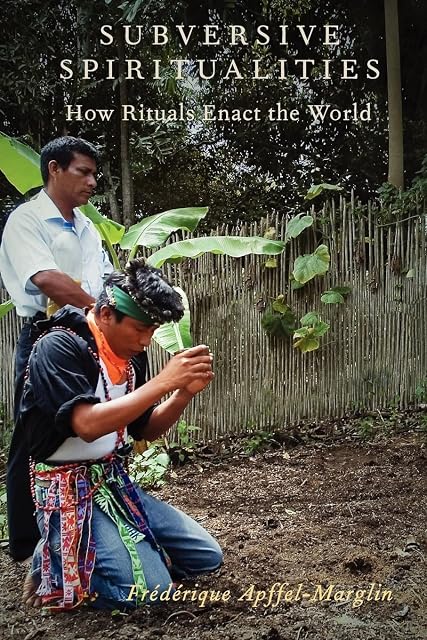
Even in the twenty-first century, some two-thirds of the world's peoples quietly live in non-modern, non-cosmopolitan places. In such places the multitudinous voices of the spirits, deities, and other denizens of the other-than-human world continue to be heard, continue to be loved or feared or both, continue to accompany human beings in all their activities. In Subversive Spiritualities, Frédérique Apffel-Marglin draws on a lifetime of work with the indigenous peoples of Peru and India to support her argument that the beliefs, values, and practices of such traditional peoples are ''eco-metaphysically true.'' In other words, they recognize that human beings are in communion with other beings in nature that have agency and are kinds of spiritual intelligences, with whom humans can be in relationship and communion. Ritual is the medium for communicating, reciprocating, creating and working with the other-than-humans, who daily remind the humans that the world is not for humans' exclusive use. Apffel-Marglin argues that when such relationships are appropriately robust, human lifeways are rich, rewarding and, in the contemporary jargon, environmentally sustainable. Her ultimate objective is to ''re-entangle'' humans in nature, by promoting a spirituality and ecology of belonging and connection to nature, and an appreciation of animistic perception and ecologies. Along the way she offers provocative and poignant critiques of many assumptions: of the ''development'' paradigm as benign (including feminist forms of development advocacy), of most anthropological and other social scientific understandings of indigenous religions, and of common views about peasant and indigenous agronomy. She concludes with a case study of the fair trade movement, illuminating both its shortcomings (how it echoes some of the assumptions in the development paradigms) and its promise as a way to rekindle community between humans as well as betwee