Comparativa de precios
-
 Amazon
Mejor opción
28,22 € Envío gratisTotal 28,22 € 2 días
Amazon
Mejor opción
28,22 € Envío gratisTotal 28,22 € 2 días
Compras directamente en la tienda oficial, al mismo precio que yendo por tu cuenta. Los precios y la disponibilidad pueden variar; cada oferta indica cuándo se consultó su precio si no es reciente.
Sobre este libro
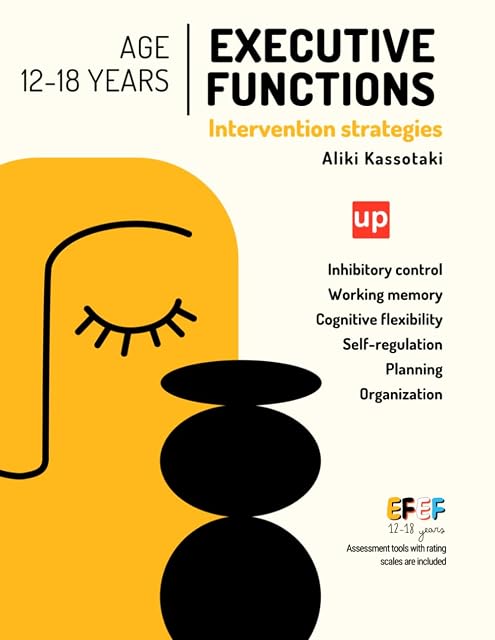
If you work with adolescents who struggle to stay organized, control their impulses, or manage anxiety, this book is the tool missing from your intervention practice. It covers all five domains of executive functioning with 50+ developmentally graded activities for ages 12–18 grounded in neuroscience and designed for immediate application. Each activity includes ready-to-use worksheets, instructions, and difficulty variations, allowing you to tailor the intervention to each adolescent. It also includes the EFEF (12–18 years) assessment tool for mapping the profile before and after intervention. Executive functions do not mature automatically with age they require targeted training, especially during adolescence, when demands increase rapidly and the brain is still developing. “Executive Functions – Intervention Guide Ages 12–18” provides professionals with a comprehensive, structured intervention system that works in practice. Each section begins with a brief theoretical introduction definitions, developmental stages, and neuroscientific background and immediately moves into activities that can be applied from the very next session. The five thematic sections cover: Inhibitory Control Techniques such as Gas Brake Compass, response inhibition puzzles, and real-life adolescent scenarios (social conflicts, digital impulses, anxiety) help adolescents recognize impulses and make conscious choices. Self-Regulation The 90-Second Rule, the Intensity Ladder, body sensation mapping, and cognitive restructuring techniques provide adolescents with concrete tools to manage emotions and anxiety without escalating or withdrawing. Working Memory Reverse sentences, grouping under pressure, error detection, and the Feynman Technique train adolescents to retain and process information in demanding cognitive situations. Cognitive Flexibility Combining incompatible stimuli, moral dilemmas, the architecture of chaos, and abstract connections help adolescents shift perspective, tolerate uncertainty, and think creatively when things do not go as planned. Planning & Organization Backward planning, action prioritization, dynamic scheduling, and the mental contrasting technique equip adolescents with the tools to organize time, responsibilities, and goals with autonomy. The book also includes the EFEF (12–18 years): an evaluation tool with age-based scoring scales, assessment charts, and a completed example for clinical application.